INTERTWINE
As part of the 48-hour game jam Jampacked, we designed and developed Intertwine, a 2D experience-based game that immerses players in the mental state of someone living with Obsessive Compulsive Disorder (OCD). The goal was to create an interactive narrative that raises awareness about the invisible struggles of OCD through gameplay rather than exposition.
Tools used

GameSalad

Illustrator
Timeline
48 Hours
Type
2D Video Game
Role
Lead Designer, Developer
Contributors
Shrutkirti, Ananya

Problem
Our primary research revealed a troubling reality:
Limited Treatment & Misconceptions: OCD is often misunderstood as simply “being neat” or “liking order,” which leads to dismissal of its seriousness.
Social Stigma: People suffering from OCD frequently face judgment, isolation, and a lack of empathy, which discourages them from seeking help.
Low Awareness: Despite affecting millions worldwide, OCD lacks widespread educational campaigns or accessible resources, leaving the public unaware of its mental and emotional toll.
These gaps inspired us to use gameplay as a medium to convey the emotional and psychological chaos of OCD - something words alone can’t capture.
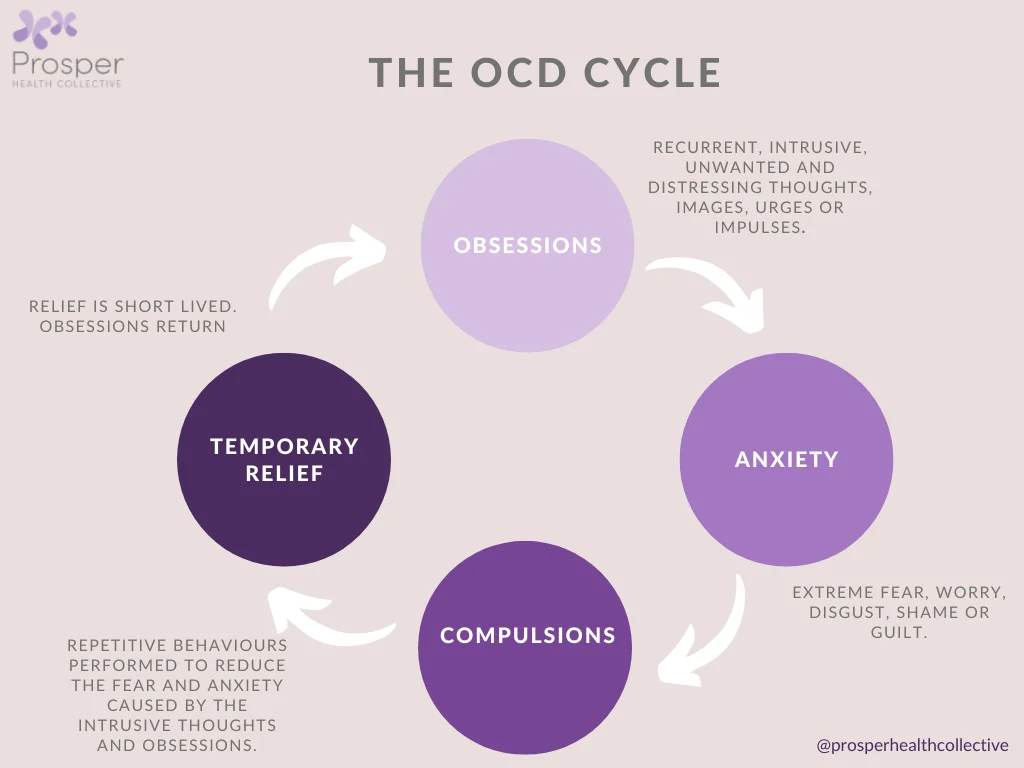
Instead of attempting to “cure” OCD in-game, we focused on empathy-building.
Players are placed in a room where objects begin to fall, bounce, and shift chaotically. The environment shakes violently whenever an object is out of place, mirroring the overwhelming mental tension OCD sufferers feel when things aren’t “just right.”
The player’s task is to return each object to its designated spot amidst the chaos. As more objects are restored, the shaking subsides, symbolizing the gradual relief experienced after compulsive actions. Completing each level brings the player to the next stage of OCD’s mental cycle.
LEVEL DESIGN
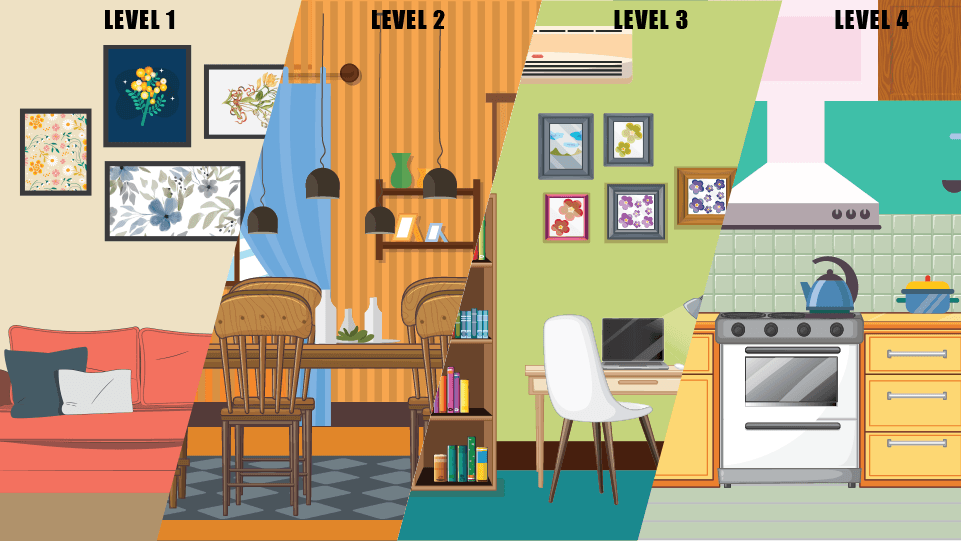
Intertwine unfolds across four levels, each representing a distinct stage of OCD:
Level 1: Obsession
Unwanted, distressing thoughts are triggered when an object is displaced. The room begins to shake violently, representing the mental disturbance of an OCD trigger.Level 2: Anxiety
To depict the extreme fear and worry, we introduced a time limit and varied object sizes, forcing players into the same sense of urgency and pressure that people with OCD often experience.Level 3: Compulsion
To reflect the compulsiveness and repetitiveness that reduce anxiety, we added two connected rooms—Fireplace and Bedroom. Players must stabilize both rooms by arranging objects, illustrating how compulsive behaviors often spill beyond a single space.Level 4: Temporary Relief
After all objects are correctly placed, the room finally settles, offering a fleeting sense of calm—only for the cycle to begin again, illustrating the repetitive nature of OCD.
We began by prototyping the core mechanic - object placement under chaotic physics- in GameSalad, iterating on timing, shake intensity, and visual feedback to create a sensory overload without frustrating the player.
Illustrator was used to craft minimal yet expressive 2D assets that convey emotion through simplicity.
The result is an emotionally charged interactive experience that transforms clinical symptoms into tangible gameplay, leaving players with a deeper understanding of the tension, urgency, and repetitive relief cycle characteristic of OCD.
OUTPUT
WHAT’S NEXT?
Designing a soundscape to heighten tension and mirror the internal noise of obsessive thoughts.
Expanding the game with branching narratives to explore different OCD subtypes.
Consulting psychiatrists and mental health care centers for secondary research and implementing changes based on expert feedback.
Showcasing Intertwine at mental health awareness events to spark dialogue and empathy.